Meditation Room
Meditation, the Nervous System, and the Road Back to Myself
I began meditating long before I knew much about the nervous system. Years later, after migration, burnout and rebuilding my life, I began to understand why the practice had become such an important tool for awareness, regulation and the way I wanted to live.

I began meditating long before I knew much about the nervous system.
At the beginning, I did not have words like interoception, autonomic regulation or neuroplasticity. I was not thinking about the vagus nerve, stress responses or what was happening inside the brain when I sat quietly and watched my breath. The language I encountered was different. It came through martial arts, Kriya Yoga, concentration, breathing, energy, stillness and the old idea that somewhere beneath the constant movement of thought there was another way of experiencing ourselves.
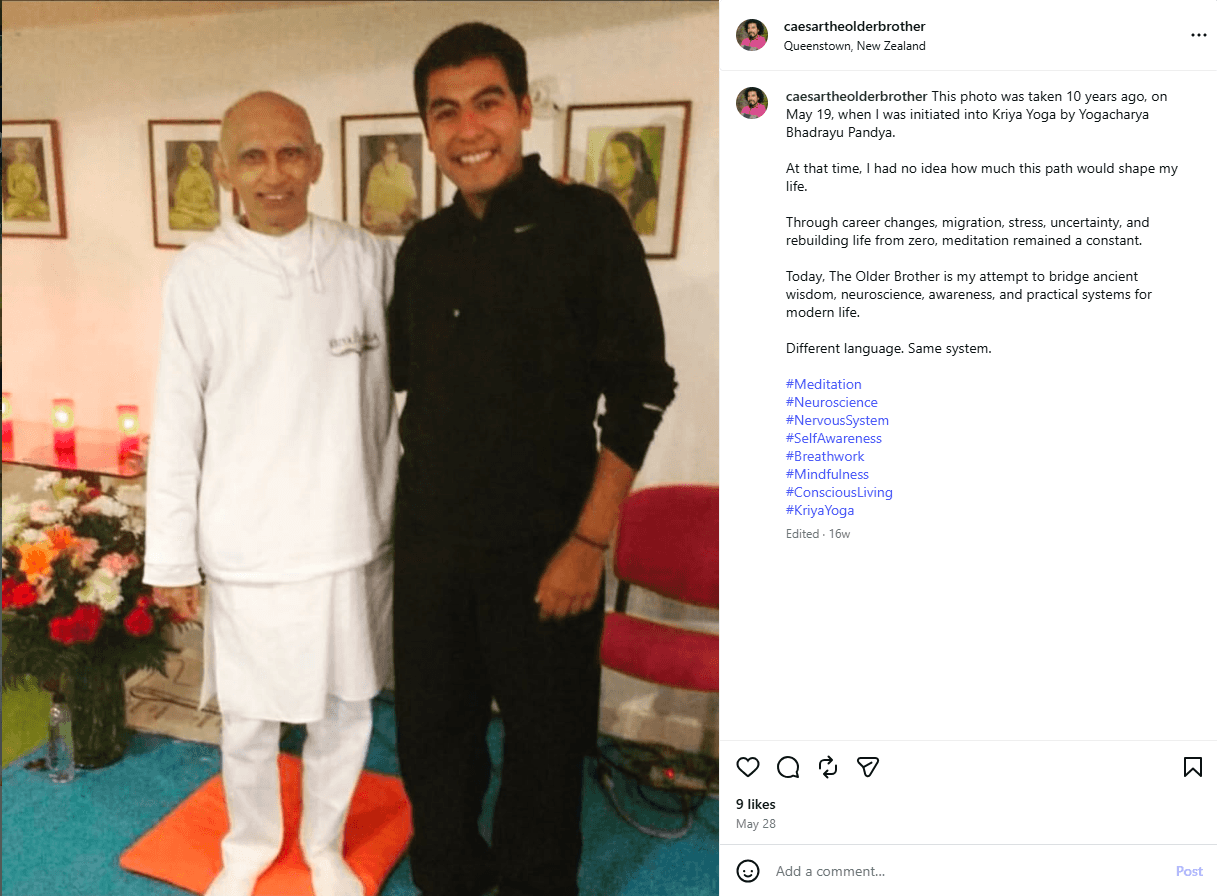
I started practising meditation seriously around 2016. At the time, I understood it mostly as an inner practice. You sat. You breathed. You attempted to focus. You discovered very quickly that the mind had other plans.
That discovery alone was important.
Until you deliberately try to hold your attention on something as simple as the breath, you can live for years without realising how little control you sometimes have over your own attention. A thought appears, then another. A memory becomes a conversation. A worry becomes an imaginary future. Five minutes later, the body is sitting in one place while the mind has travelled across countries, decades and possibilities.
Meditation showed me that.
But understanding something intellectually and living according to it are very different things.
The years that followed became years of movement. Migration, work, reinvention, ambition, relationships, businesses, successes, failures and the strange process of trying to construct a life in another country. There were periods when meditation was present and periods when it moved towards the background. Like many practices we know are good for us, it became easier to return to when life was calm and easier to neglect when life became complicated - precisely when it was probably needed most.
Then life became complicated.
By the time I reached the period I describe in The Older Brother as reconstruction, meditation had started to mean something different to me. I was no longer approaching it simply because an ancient tradition said there was value in sitting still. I was returning to it after experiencing what prolonged stress, uncertainty and constant adaptation could do to a human being.
I had begun paying attention to my body in a way I had not before.
There were moments when my thoughts seemed to move faster than circumstances required. Moments when the body remained tense even though nothing dangerous was actually happening. Days when rest did not necessarily produce the feeling of being rested. I began noticing the relationship between breathing, attention, emotion and physical state.
And gradually a question emerged that would become important to me:
Why does meditation calm me?
It sounds like a simple question. It isn't.
For years I could have answered it using the vocabulary of yoga. Later, as I became increasingly interested in neuroscience and the nervous system, I discovered another vocabulary. The two did not need to become the same thing. Ancient contemplative traditions and modern neuroscience are not interchangeable, and one should not be used carelessly as proof of the other. But they can sometimes look at different parts of the same human experience.
The nervous system gave me a language for something I had already been observing.
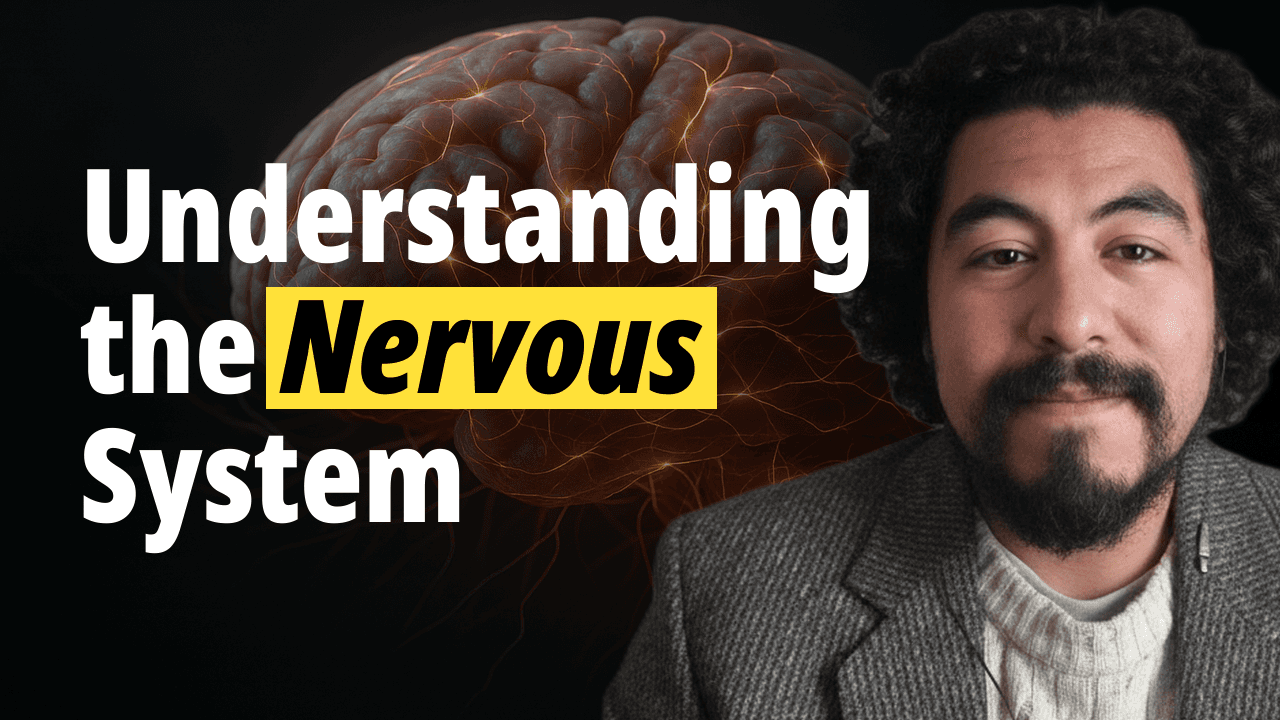
Our bodies are constantly responding to the world around us. Much of this happens before conscious thought becomes involved. The autonomic nervous system helps regulate processes such as heart rate, breathing, digestion and responses to perceived threat or safety. Attention also matters. Breath matters. The signals we notice coming from inside the body matter.
Meditation began to look less like an escape from ordinary life and more like training for how to inhabit it.
When I sat and noticed my breath, I was practising attention. When I noticed tension without immediately reacting to it, I was practising awareness. When a thought appeared and I learned not to follow every story it produced, I was creating a small space between stimulus and response. When I slowed my breathing and allowed the body to settle, I was learning that my internal state was not completely beyond my influence.
None of this meant that meditation made difficulty disappear.
That became an important distinction for me.
Meditation did not prevent problems. It did not eliminate uncertainty. It did not make me permanently calm, spiritually superior or immune to stress. I could meditate in the morning and still become frustrated later that afternoon. I could understand awareness and still react automatically. I could know the theory and still find myself caught inside the very patterns I was trying to observe.
But something had changed.
I could see them.
And perhaps that is where awareness begins.
Not in perfection, but in noticing.
There is a great difference between being angry and recognising, anger is happening in me right now. There is a difference between being consumed by anxiety and becoming curious about the physical sensations accompanying it. There is a difference between following every thought automatically and recognising that a thought is an event occurring in consciousness, not necessarily an instruction that must be obeyed.
Meditation gradually gave me access to that small distance.
And sometimes a small distance is enough to change what happens next.
During this period I returned to the teachings of Kriya Yoga with a different mind. I revisited practices I had learned years earlier, but now I was carrying experiences that had changed the questions I was asking. I was interested not only in what a practice meant philosophically, but also in what I could observe while doing it.
What changed when the breath became slower?
What happened when attention moved into the body?
Why did certain forms of concentration make the mind feel quieter?
Why did gratitude produce such a noticeable shift in emotional state?
Why did awareness itself sometimes seem capable of interrupting a reaction?
These questions became part of my practice.
Eventually something else happened. Meditation stopped feeling like something that belonged only to my private life.
After returning to Queenstown from a period in Colombia, I found myself in a strange transition. Several things that had previously given structure to my life no longer seemed to carry the same meaning. I was reassessing work, identity, direction and what I wanted the next chapter of my life to be about.
Meditation remained.
I started wondering whether I could share some of what had helped me.
That thought made me uncomfortable.
There is something very different between practising quietly by yourself and sitting in front of a room of people who have trusted you to guide them. I did not want to pretend to be a guru. I did not want to reproduce spiritual language people might not connect with. And I certainly did not want to present personal experiences as scientific facts.
So I decided to start simply.
On 8 March 2026, I ran my first public Introduction to Meditation workshop at Te Atamira in Queenstown.
Twelve people registered.
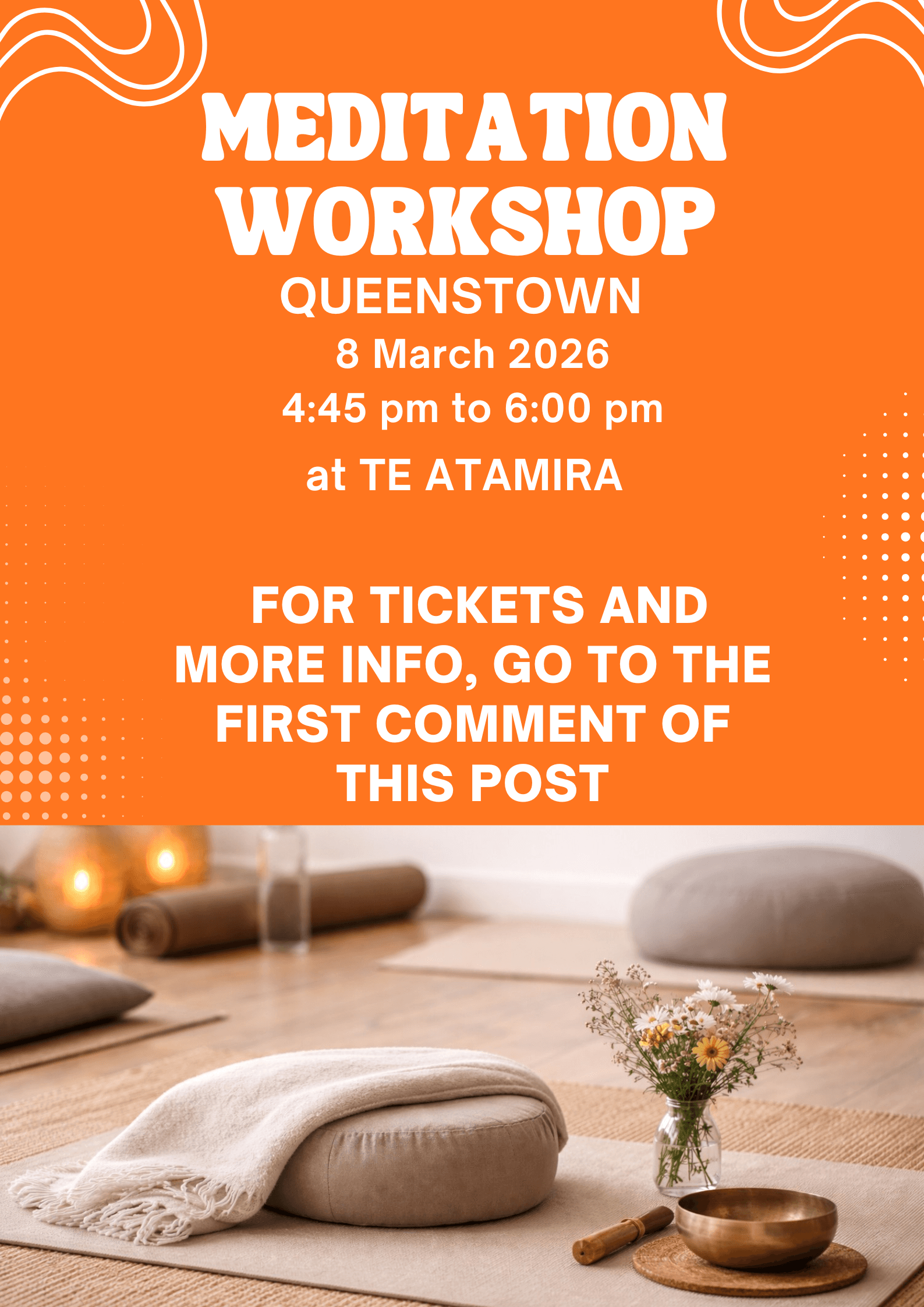
I still remember what that meant to me. Before that workshop, meditation was something I had practised for years. But the moment someone bought a ticket, it became a responsibility. A person I did not know was giving me part of their Sunday because they believed I might be able to show them something useful.
I created a practice for beginners.
The influence of Kriya Yoga was there because it was part of me, but I did not teach the session as Kriya Yoga. I wanted the techniques to stand on their own: breathing, body awareness, attention, concentration, observation and stillness. People did not need to adopt a belief system to experience their own breath.
That principle has remained important to me.
The sessions developed from there.
At Te Atamira, we explored attention, focus and intention. At Sangha, during International Yoga Day, I guided a meditation around awareness, balance and the connection between body and mind. I began experimenting with visualisations inspired by Queenstown - the lake, mountains, cold air, open sky and the strange silence that sometimes settles over this place.
Something else emerged from those sessions: gratitude.
During one meditation, a participant told me afterwards that she had connected particularly strongly with the moment when I invited the group to experience gratitude. That stayed with me.
I had always understood gratitude conceptually. But guiding other people made me notice how powerfully a positive emotional state could change the texture of attention. When gratitude appeared, people were no longer simply trying to force themselves to concentrate. Attention became easier to inhabit because there was something meaningful to rest it upon.
That changed the way I began constructing meditations.
Instead of treating meditation only as an exercise in suppressing distraction, I became interested in cultivating useful internal conditions: curiosity, gratitude, calm, openness and clarity.
The goal was never to manufacture permanent happiness.
It was to discover that our relationship with our internal state could be trained.
That idea eventually became connected to a much larger framework in my life.
In The Older Brother, I write about moving from survival towards awareness, self-mastery, meaning and contribution. Meditation sits inside that journey, but meditation is not the destination.
It is a tool.
Neuroscience is a language that helps me investigate some of what may be happening.
The nervous system is part of the mechanism through which we experience the world.
But the destination is something larger.
A better human life.
For me, that means becoming slightly less controlled by automatic reactions. Becoming more capable of recognising what is happening inside me before projecting it onto the world. Learning when the body needs activation and when it needs rest. Developing the capacity to place attention deliberately rather than allowing every notification, fear, desire or thought to decide where it goes.
And eventually, using whatever clarity we develop for something beyond ourselves.
That is why this Meditation Room exists.
I do not want it to become a collection of promises about enlightenment. Nor do I want it to become another corner of the internet where every ancient practice is given a neuroscience label to make it sound legitimate.
I want this to be a place of investigation.
Sometimes I will write about meditation and the nervous system. Sometimes about attention, awareness or breathing. Sometimes about old yogic ideas that continue to interest me. Sometimes about what happens in a meditation room in Queenstown when twelve ordinary people close their eyes for a few minutes and discover how extraordinarily difficult - and extraordinarily useful - it can be simply to remain present.
I am still learning.
Perhaps that is the most appropriate place from which to begin.
I started meditating because I was looking inward.
Years later, life gave me a reason to understand what I was finding there.
And now, slowly, I am learning how to share it.
Continue the journey
Explore the story behind these practices in The Older Brother — A Memoir of Migration, Reinvention, and Freedom.
Keep the conversation going
What did this reflection bring up for you? Join the conversation on Facebook.